Loading... Please wait...

Style Advice Blog
Recent Posts
The Art of Looking Good: Buttoning Your Suit Jacket
Posted on
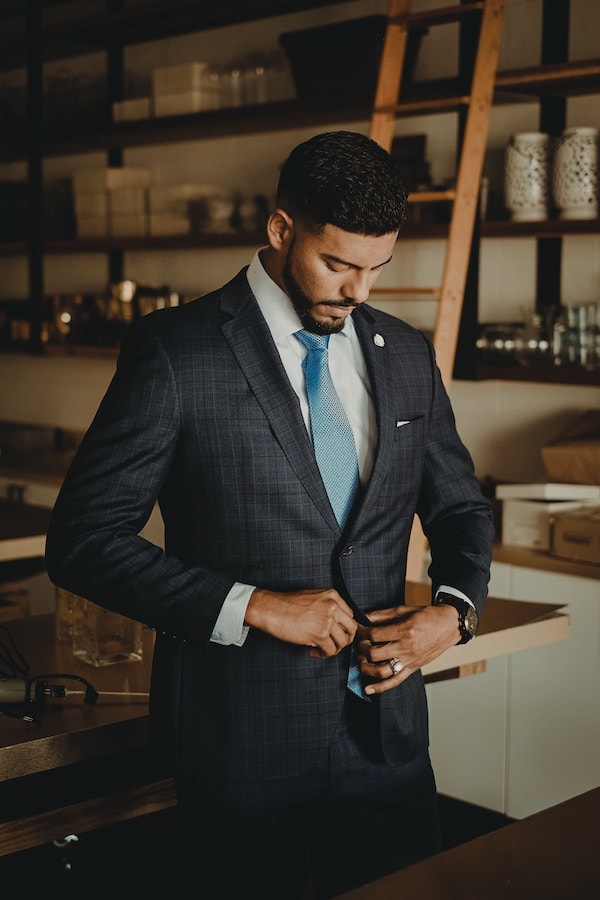
If you didn’t already know, yes, there are rules to buttoning a suit jacket. Though these rules are a convention, they’re an important one if you want to look your best.
Where do the suit buttoning rules come from?
Not just a mere sartorial quirk, there’s some history behind the suit buttoning rules. When men first started wearing suits, there were no formal buttoning rules. Men buttoned their suit jackets in a way that pleased them. A popular theory credits King Edward VII with starting the trend to leave the last button of a waistcoat, or vest, undone, in the 1900s. With a legendary appetite, Edward became so fat he couldn’t do up the bottom button on his waistcoat. So that he didn’t feel bad about his figure, his court copied this habit and it soon caught on in all of Britain.
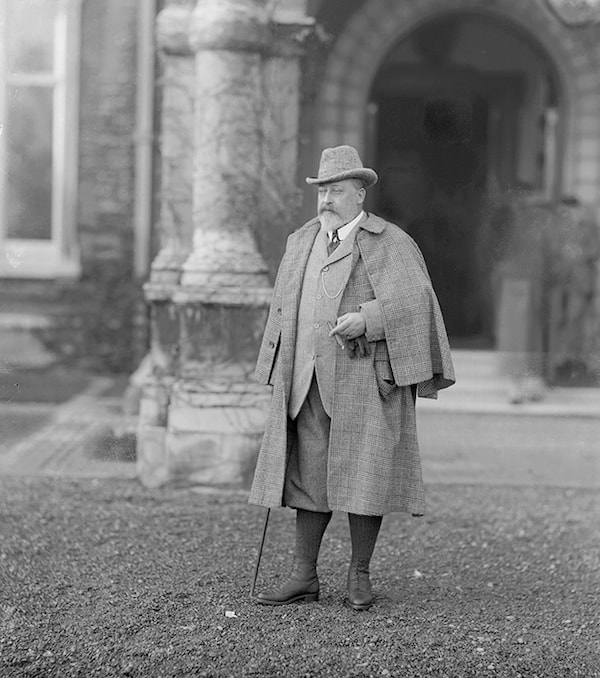
A dapper King Edward VII standing with a cigar in 1902. V&A Lafayette
King Edward VII also set the trend for unbuttoning the bottom of suit jackets. Edward left the bottom button undone as a throwback to when suit jackets were worn as riding coats and to look less “common”. In the beginning, suits were meant more for casual wear, and were even worn when riding horses. They had three buttons, and as the third button sat below the waist, it had to be unbuttoned for the jacket to be comfortable when sitting atop a horse.
Why do we follow the suit buttoning rules today?
Nowadays the fashion is for suit jackets and blazers to have two-buttons. However, as the tradition has been to leave the last button undone for such a long time, suits and waistcoats are actually designed for this purpose. Whether it’s a sports jacket, blazer, suit jacket or waistcoat, they’re now cut in such a way as to drape (and look) best when the bottom button is undone.
Fashion tip: by following the suit button rules, you’re not only paying homage to the origin of suits, but also signalling that you’re in the know. You care about putting effort into your appearance. This small action to pay respect to the past will help you command respect today.
So what are these rules exactly? It depends on whether you’re wearing a single- or double-breasted jacket, or a waistcoat, and how many buttons your jacket has. Note, this guide applies to a regular cut jacket, and not something like a paddock-cut jacket.
How to Button the Single-Breasted Suit Jacket
The One-Button Suit Jacket

- Button when standing and unbutton when sitting
The Two-Button Suit Jacket

- When standing, always fasten the top button and unbutton only when sitting
The Three-Button Suit Jacket

- Fastening the top button is optional
- Always fasten the middle button
- Never fasten the third button
How to Button the Double-Breasted Suit Jacket
Double-breasted suits are designed to be buttoned up, because of the overlapping front flaps that would otherwise hang loose if left unbuttoned. Only when you sit are the buttons unfastened. Double-breasted jackets are described according to their button configuration. The total number of buttons on the jacket front is written first, followed by the number of working buttons. For example, a 6x2 jacket has six buttons but only two buttonholes.
Most commonly, only one column, the one furthest towards the edge of the front flap, contains the working buttons. The other visible buttons are for decorative purposes. Quality double-breasted suits will also generally have at least one functional inner button parallel to the working button. This fastens the suit from the inside, and helps the fabric drape more nicely over your body.
The Two-Button Double-Breasted Suit Jacket

A two-button 2x1 double-breasted suit is not commonly seen today because it’s thought of as a relict of the 80s. However, it’s the least uncomplicated to button.
- Button the one (and only) working button
The Four-Button Double-Breasted Suit Jacket

Though not the most popular style, four-button double-breasted suit jackets are timeless and classic. The 4x1 is more common than the 4x2.
- For the 4x1, you only need to fasten the bottom working button.
- For the 4x2, fasten either the top, bottom or both buttons.
The Six-Button Double-Breasted Suit Jacket

The most popular style of six-button double-breasted suit has the top two buttons on the jacket breast spaced more widely apart. This creates a very flattering silhouette by accentuating a man’s V-shape figure. You’ll most likely see 6x2 double-breasted jackets, but other variations are possible. Though it’s traditional to button the bottom button, most men leave the bottom button undone for a more nonchalant air.
- For the 6x2, fasten both of the buttons for a classic look or leave the bottom button undone for effortless suave.
More Than Six Buttons
Double-breasted suit jackets with more than 6 buttons do exist, but they’re rare. When buttoning up, it’s important to pay attention to how you button both the inside and outside buttons, as the wrong button fastened can pull the fabric and make it look off-kilter.
How to Button a Vest

The rules for buttoning a vest or waistcoat are much easier to follow. No matter how many buttons your vest has, the following guidelines apply.
Single-Breasted Vest
- Fasten all buttons except for the last bottom button.
Double-Breasted Vest
- Fasten all buttons at all times.
- For comfort when sitting, you can undo the bottom button on the outer edge.
With the knowledge on how to button your suit jacket or vest, you’ll always pull off a suit impeccably. It’s the small details that count, and will make the most of your effort to dress up. If you feel uncertain about putting together a look for a suit, come into a Joe Button showroom today for personalised guidance and the latest style tips.
What to wear to the Melbourne Cup: The Men's Guide
The Melbourne Cup Carnival is the most prestigious racing event in Australia, where the most iconic fashion is displayed. If you’re wondering what men should wear to the races, don’t stress! Dress codes are pretty relaxed for general admission goers, so looking your best is all about having fun. Keep in mind though, that each [...]
All You Need to Know About Ties: Part 3 - Tie Knots
Once you’ve chosen the style of tie, the fun’s not over. You’ve come to the right part of the guide to learn the different ways to tie a tie knot. As ties were once a staple of men’s fashion (and some would argue, still are), dozens of ways to tie a tie have evolved. Ways [...]
All You Need to Know About Ties: Part 2 - Tie Fabrics
Ties come in all different kinds of styles and patterns, as you’ve seen in Part 1. Yet, not only are tie patterns different, so are the fabrics and materials that they’re made out of. The material of a tie affects its aesthetic look, feel and knot-tying qualities. Certain tie fabrics are more suitable for specific seasons, [...]
All You Need to Know About Ties: Types of Ties
The modern necktie or simply tie, has been a staple of men’s fashion since the early 20th century. In many professions, a tie was a mandatory part of the dress code. In the realm of business, it certainly instills an air of authority and professionalism. However, as rules of dress are becoming more relaxed, ties are [...]
How To Choose The Perfect Suit For Your Body Type
What's your body type? Depending on your body's shape, a suit that looks good in the photo might not look so good on you. The importance of fit can’t be underestimated. A suit that’s too large, too small or too tight won't look or feel good. On the other hand, a perfectly-fitted suit will enhance the best of [...]
The Basic Guide to Suit Styles For Every Man
The sartorial world of men's suits is a shape-shifting behemoth. Sometimes it’s sleek and lustrous, other times it’s nonchalant or a little bit rebellious. There’s a suit style and type for every man. You just have to get through the messy jungle. With so many fits, styles, fashions and occasions to consider, it’s easier said [...]
Custom Wedding Outfits for Men 2019: Trends
As a groom, you want to look dashing and be admired on your wedding day. It might be hard to pick a wedding outfit for men, especially if you don’t know much about the differences in styles or trends of groom suits. If you need some tips on choosing the best men’s wedding suit, we’ve [...]
Guide to Suit Alterations - Considerations for Vests
Unlike a suit jacket or pants, there isn’t a whole lot that can be done in terms of alterations to a waistcoat (otherwise known as a vest). A vest construction is very straight-forward, and the main areas that relate to fit are the girth and length. Nevertheless, a perfectly-fitting vest flatters a masculine frame with clean lines [...]
Guide to Suit Alterations - Considerations for Pants
After our lengthy article on suit jacket alterations, you’ll be relieved to know that pants are less complicated and so there isn’t a huge variety of options when it comes to alterations. Nevertheless, with a few tweaks, you can instantly go from scruffy to polished, making suit pants alterations a worthy affair. We’ve prepared a guide [...]